
Your business
runs itself.
Dopplit builds automation for any business, at any scope. If something in your operation is done by hand, we build the system that does it on its own, under your brand, from a single workflow to an operation running on autopilot.
Connects to whatever you already run
Anything you do by hand.
Six systems we have put into production, to show the shape of the work. They are examples, not a menu: if a job in your operation repeats, we build the thing that does it.
Customers order themselves
A guided menu or a pasted order, understood with shorthand and sizes. Priced against live stock.
Ordering
Orders arrive already understood and priced, so you never retype a customer's message again.
Stock that stays honest
Two-way sync with your own sheet, live deduction on every sale, and cover measured in weeks.
Inventory
You stop selling what you have already run out of, and reorder before the shelf goes empty.
Documents that reconcile
Invoices built from the order's own lines so they agree with the payment. A morning read on revenue and margin.
Paperwork
Every invoice matches its payment, and you know the day's margin without opening a spreadsheet.
Money confirms itself
e-Transfer deposits matched to the order number, crypto verified on-chain. The order flips to paid on its own.
Payments
Nothing ships unpaid and you never open a banking app to check whether a customer sent it.
Parcels go out without you
Labels and packing sheets per order, one pick list for the batch, tracking sent the moment it ships.
Fulfilment
Shipping day is one pick list and a stack of labels, with no addresses copied by hand.
The second order, handled
Cart recovery, reorder nudges timed to when product runs out, and win-back for one-and-done customers.
Outreach and retention
Customers who would have quietly drifted come back on their own, without you remembering to chase anyone.
Anyone can wire two tools together. The hard part is making sure that when something goes wrong, it fails loudly instead of quietly. These are design decisions, not settings.
One door, and you hold the dial
Every action that reaches a customer, a carrier or a wallet passes through a single controlled door. Turn the autonomy up and the business runs with nobody in the loop. The door stays there, with a kill switch, for the day you want it.
Payments never match on amount
Crypto matches on transaction hash. Transfers match on the order number, cross-checked against the amount. Two customers paying the same figure can never be confused.
Monitors fail to unknown, never to fine
When a check cannot reach what it watches, it reports unknown rather than healthy. A green board over a system nobody is watching is the exact failure this prevents.
Campaigns baseline before they arm
Switching on a recovery or follow-up campaign cannot blast a backlog at people. Everything older than the window is marked handled on the first run.
Plans are written by people
The model fills in the name, the order and the wording. It does not invent the procedure. When nothing matches a known plan, the system says so out loud.
Orders taken and shipped end to end
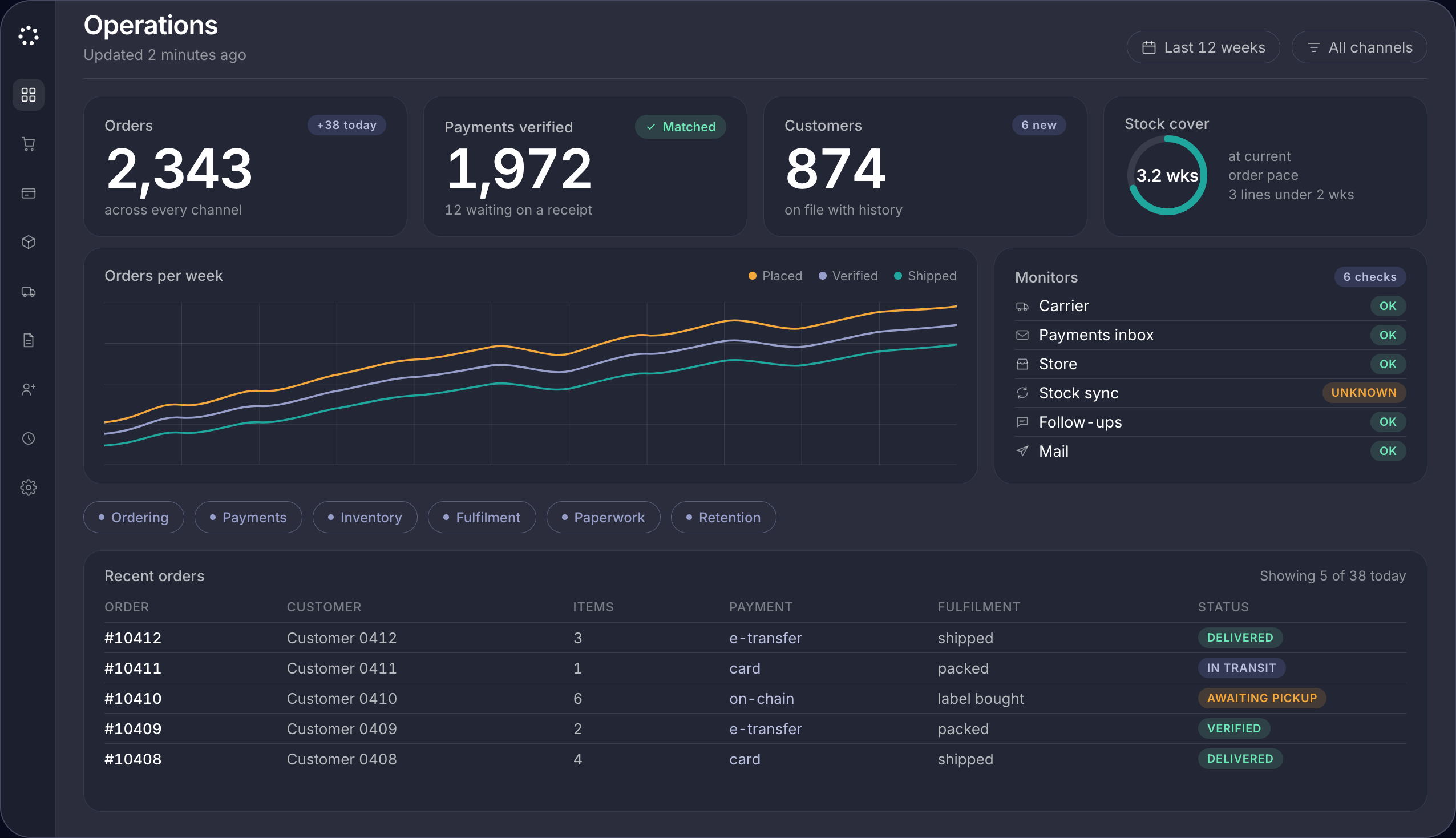
2,343
One of our builds, May to September 2026. Not a pilot, not a projection. Every number here came from a system we designed, built and run.
Payments verified
1,972
Without a human checking a single one.
Customers served
874
Through the system, under the operator's own brand.

Live in weeks,
not quarters.
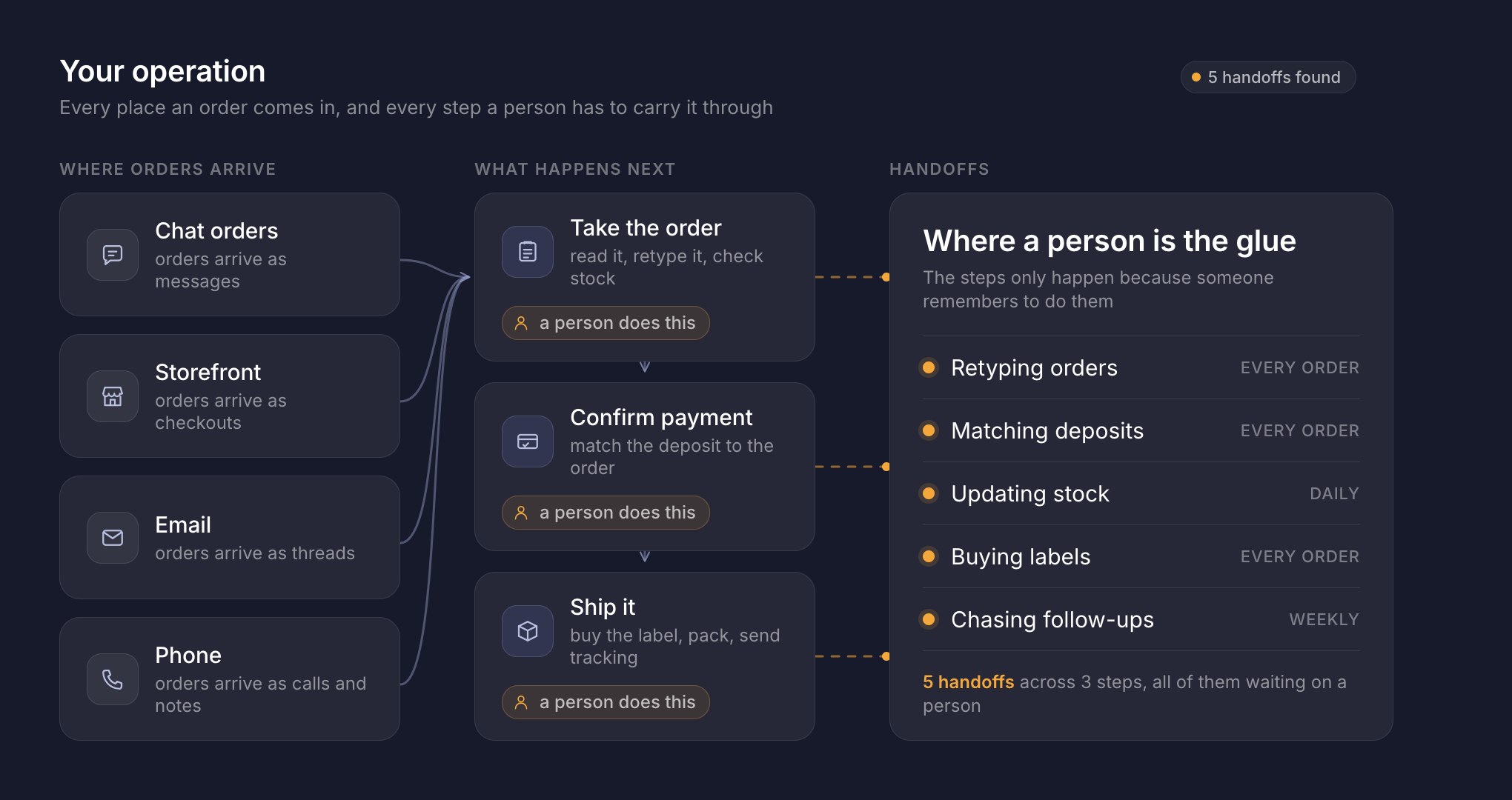
We map your operation
How work comes in, how it moves, who touches it, and every place a person is currently the glue.
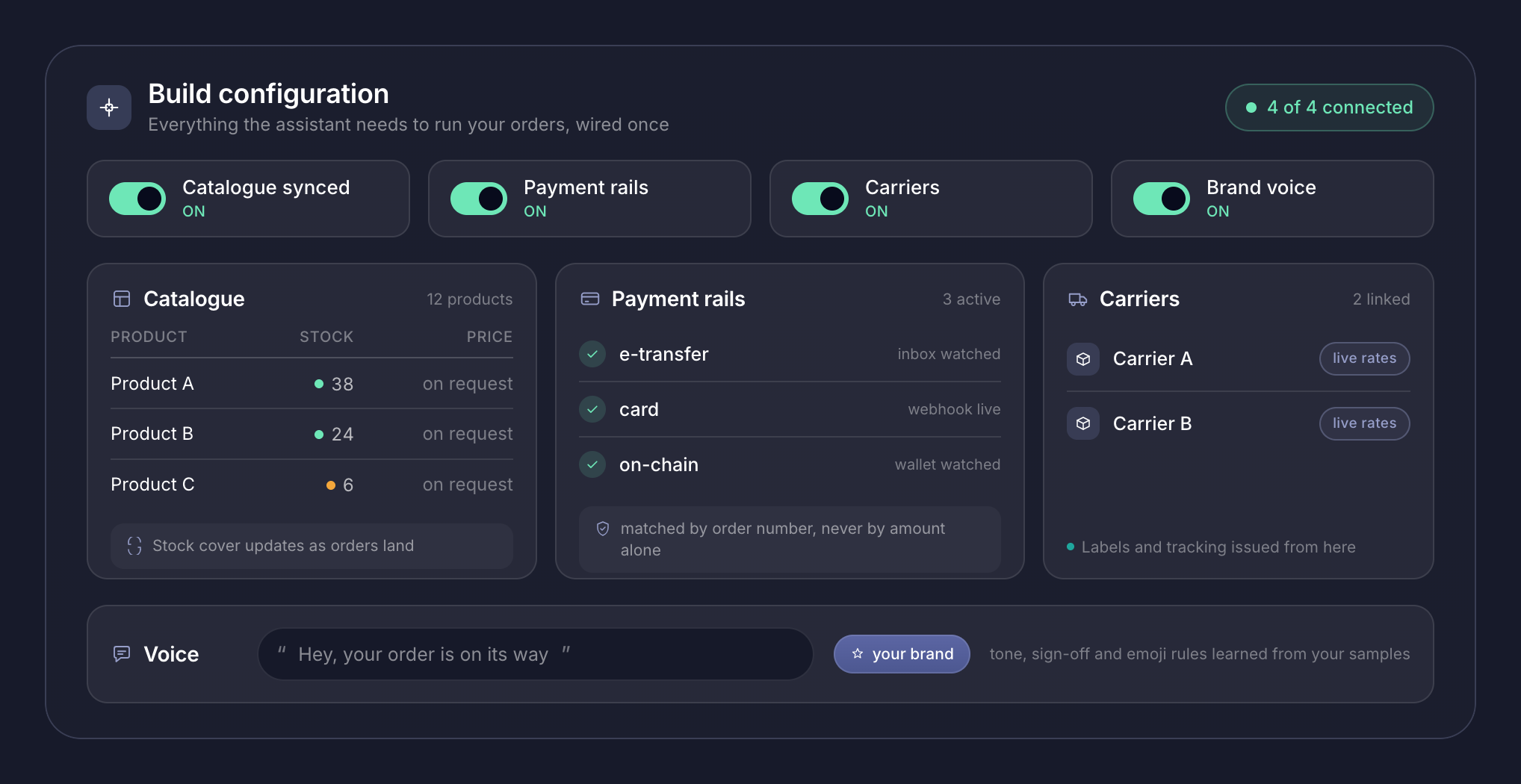
We build around it
Your tools, your rails, your voice, at whatever scope you need. Nothing generic, and no rip-and-replace of what already works.
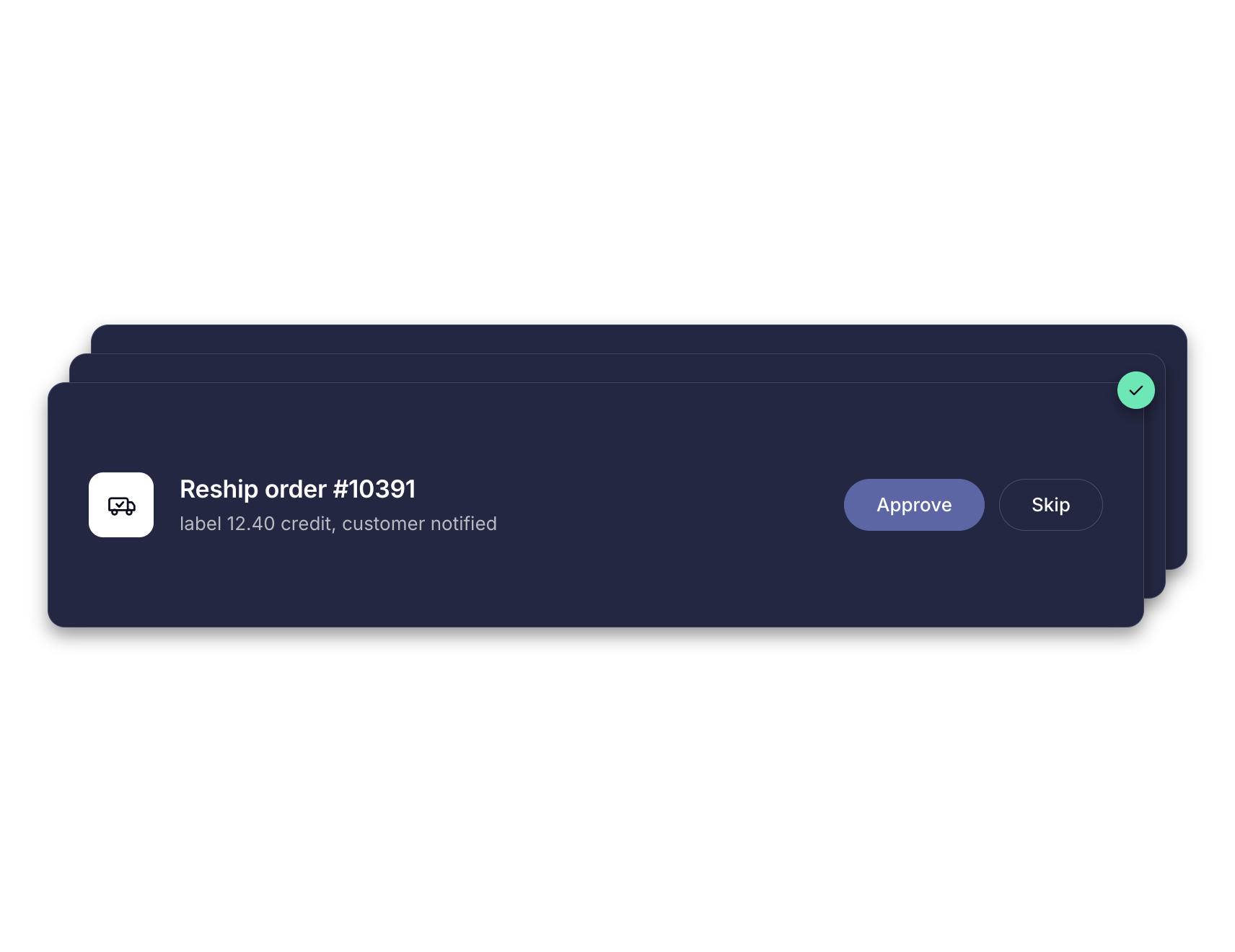
It runs itself
The systems carry the whole operation end to end, at whatever autonomy you set, up to and including nothing waiting on you.
Dopplit is built for any operation that outgrew doing it by hand:
Product businesses, one SKU to a warehouse
Service businesses buried in admin
Teams that want the whole thing to run itself
A day, before and after.
Same customers, same work, same day. The difference is who does it.
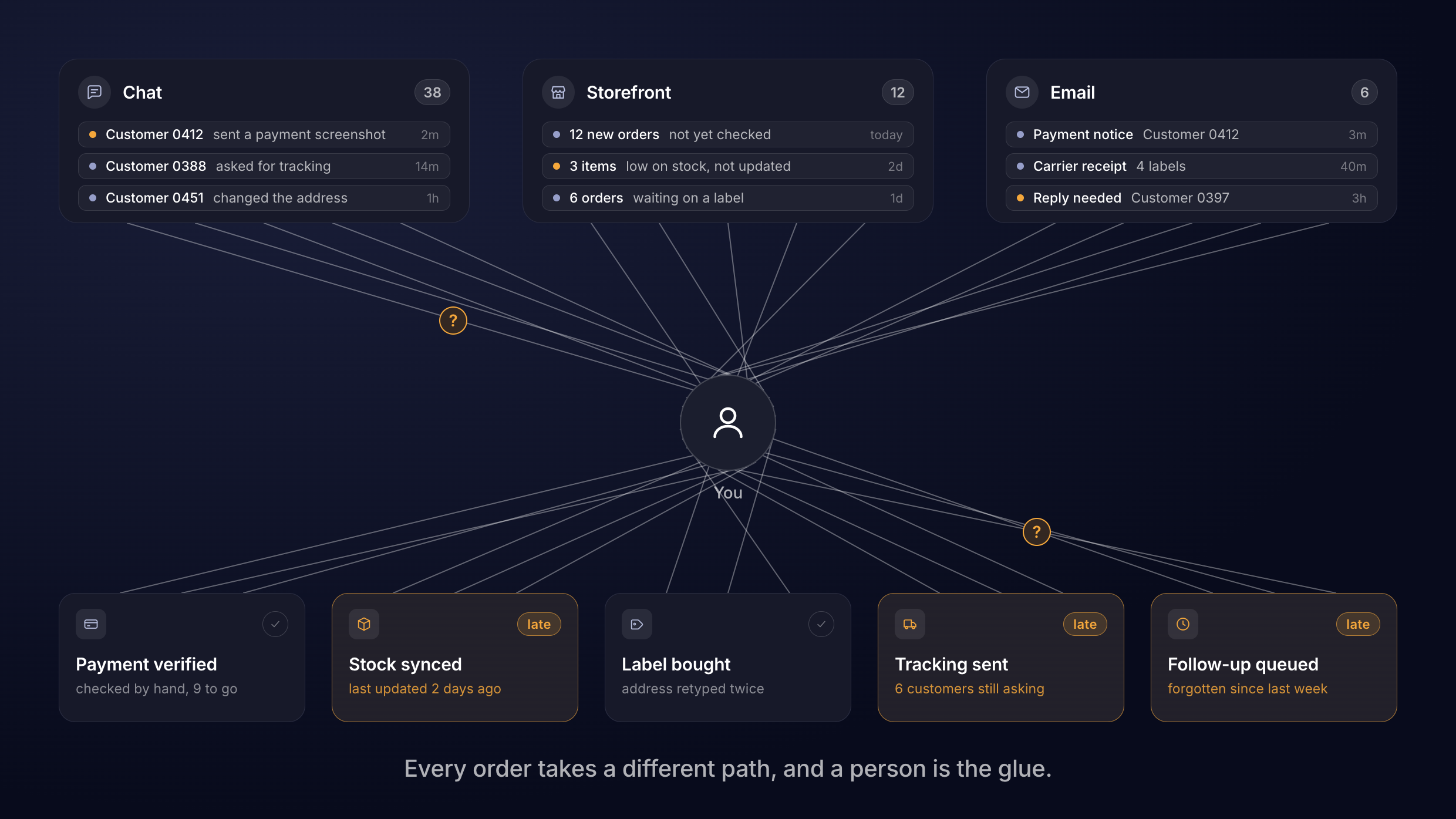
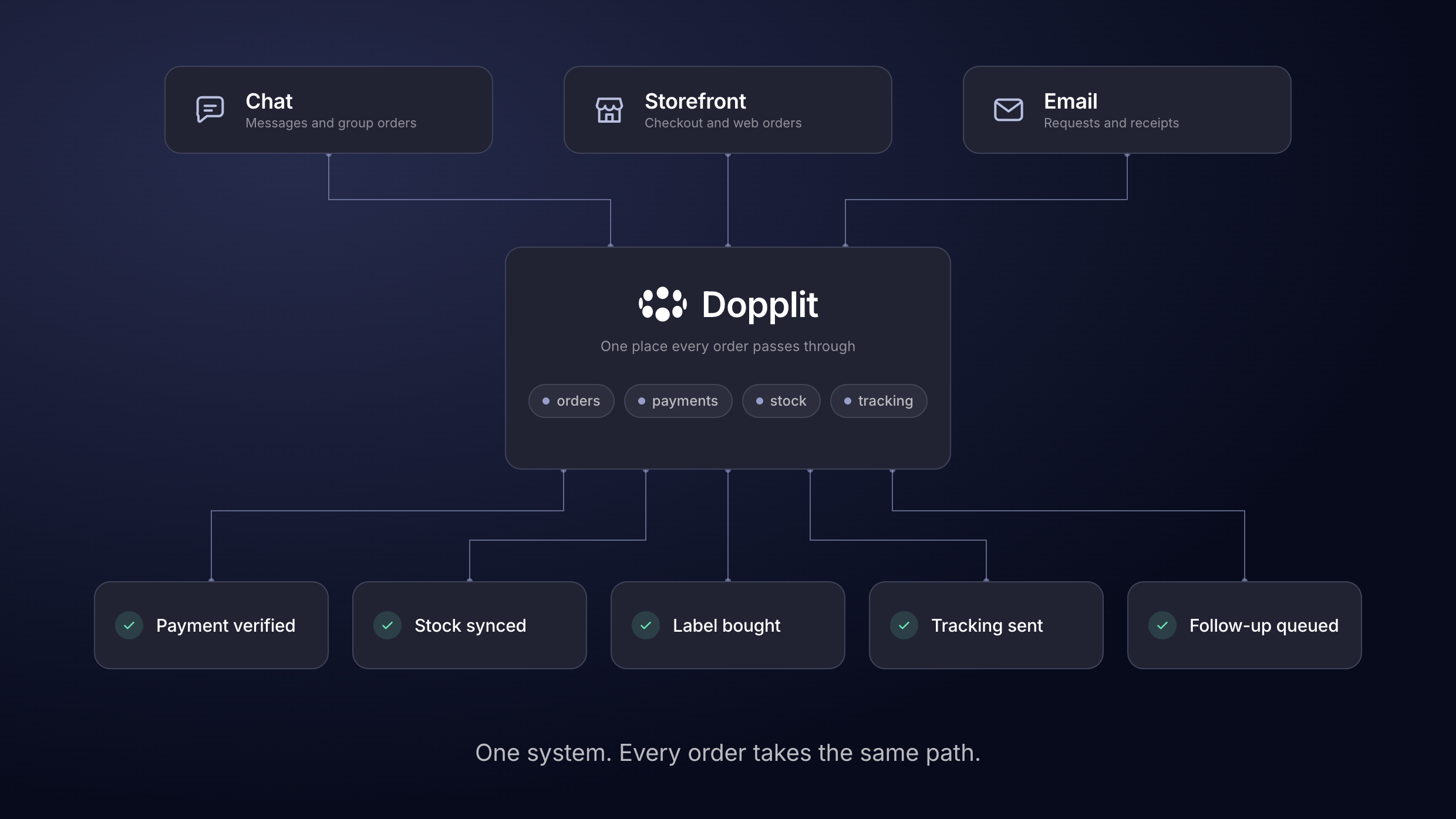
Tell us what your day looks like.
Reach out at admin@dopplit.com. Describe what you do by hand and what you want running on its own, and you will get a straight answer on what we would build, in what order, and how long it takes.
Questions people ask first.
Dopplit builds automation for businesses, at any scope: a single workflow, a whole department, or an operation that runs itself end to end, under your brand.
Anything a person does repeatedly: ordering, payments, inventory, fulfilment, paperwork, follow-up, reporting, scheduling, support. If it has a pattern, we can build the system that does it.
The ones you already run. WooCommerce, Telegram, Canada Post, Easyship, Interac, Stripe, Gmail, Google Sheets and Instagram are live today, and anything with an API or an inbox can be connected.
Weeks for most builds. We map the operation first, build around it, and switch systems on one at a time so nothing running today is disturbed.
All of it, if that is what you want. Dopplit runs the operation end to end on its own. You set how much autonomy it has and raise it as far as you like, up to a business that needs you for nothing.
Nobody, and that is the point. The systems run continuously with no person in the loop. You look in because you feel like it, not because something is sitting there waiting for you.